Look up
The tower
Timber frame, porthole windows
- Height18 metres
- Lit1878
- TodaySolar beacon
Guides
Language
Currency
Check datesstarting at $173 · free cancellationWhere is your stop
Answer in brief
The Low Isles lighthouse was first lit in November 1878, kept by families until automation in 1993, and now stands beside the only live-in caretakers on the Great Barrier Reef.
The light today
Discover 9 stops
Tap a route first, then a pin or stop, for its note and Google Maps.
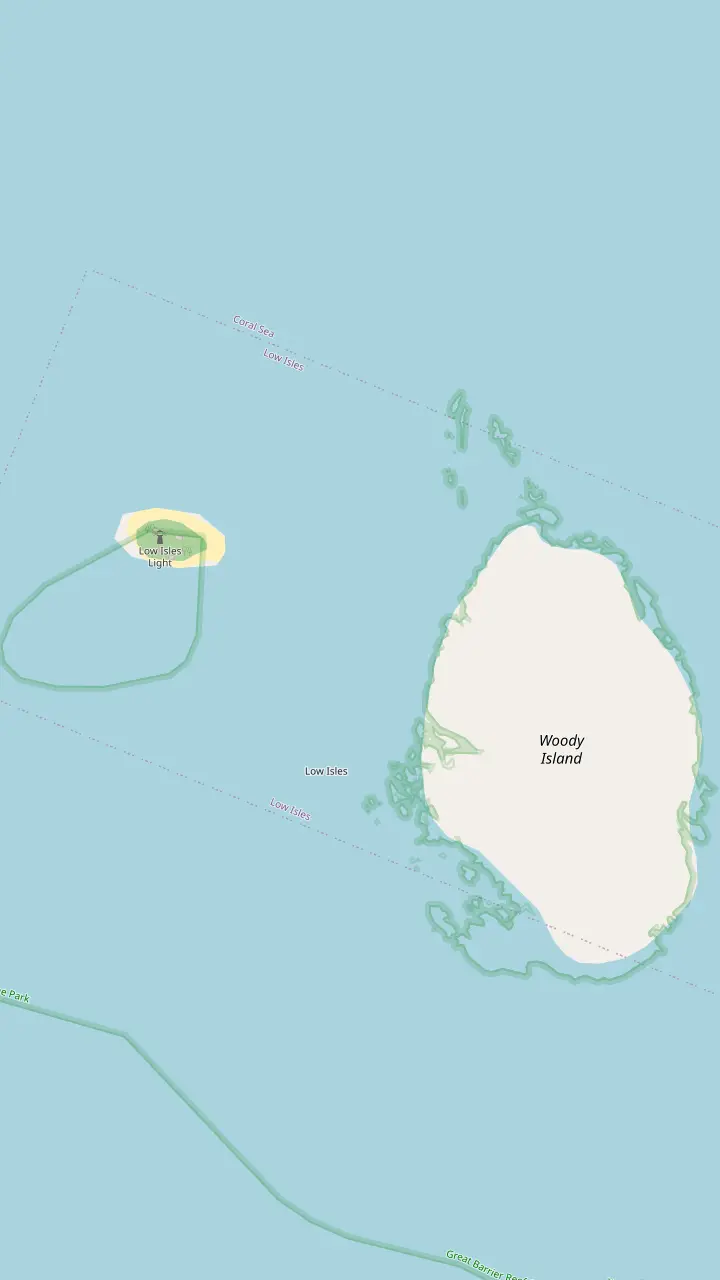
First lit in mid-November 1878, the tenth light the Queensland Government commissioned.
Google MapsThe larger, mangrove island, where an estimated 20,000-25,000 pied imperial pigeons breed from September to March.
Google Maps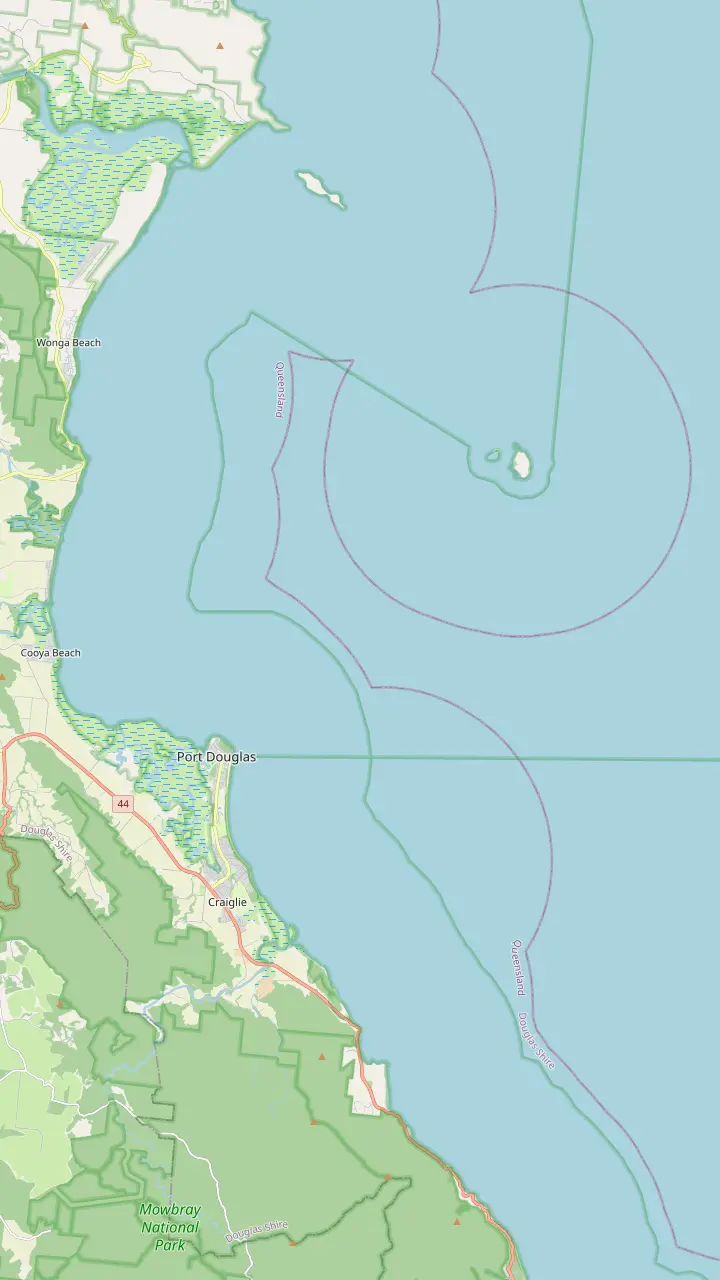
The site tour boards the Calypso XI here, then crosses to the island in 30 minutes.
Google MapsAt low tide this town beach can be over 100 metres wide.
Google MapsAn inner patch reef 15 km north-east of Port Douglas, with a coral cay and a mangrove island.
Google Maps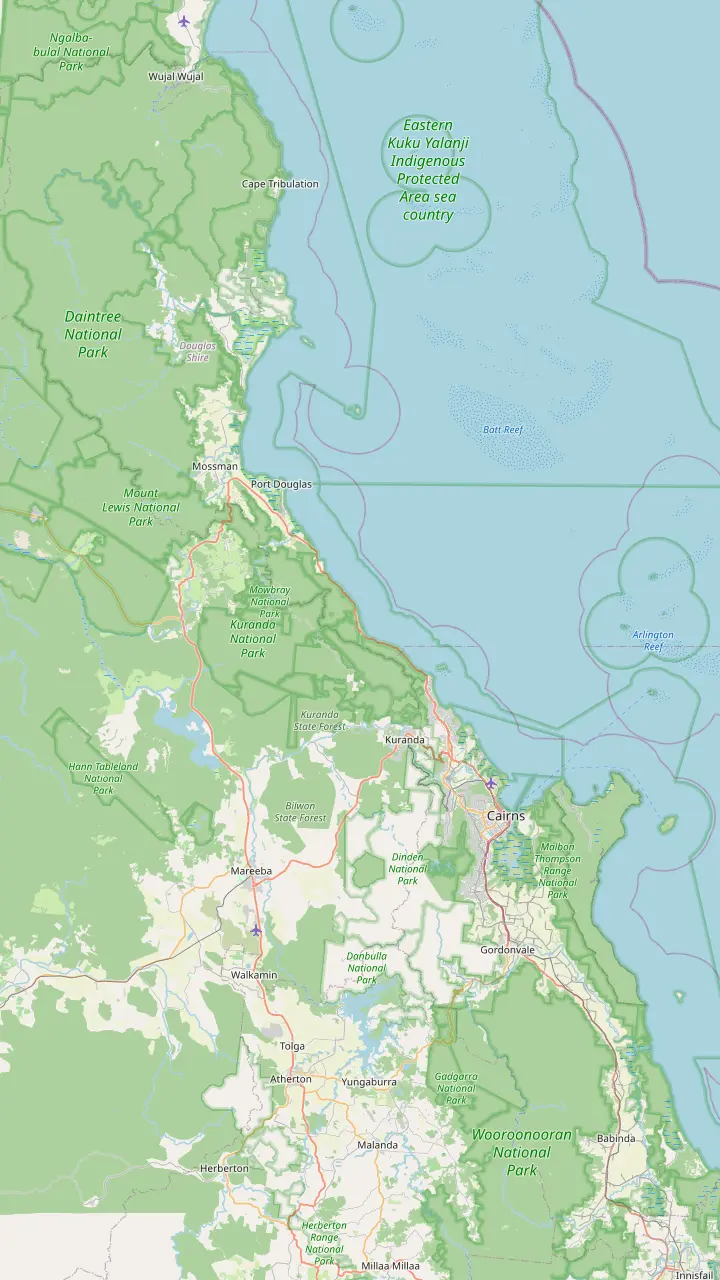
Low Isles lies 8.5 nautical miles from Port Douglas.
Google MapsA beach town on the coast road between Cairns and Port Douglas.
Google MapsPort Douglas is about a one-hour drive north along the coastal highway.
Google MapsThe Douglas Shire Library here holds the journals of the famous reef expedition that lived on Low Island.
Google MapsMap data from © OpenStreetMap contributors
The white tower on Low Island has guided ships since 1878. Its story runs from colonial tenders and keepers' families to automation and the caretakers who still live beside it.
Editorial team, lowislestour.com · Updated November 8, 2026 · A 8 min read
The Low Isles lighthouse began with a letter. On February 5, 1876, a letter asked the colony's Colonial Architect, Stanley, to turn his immediate attention to a lighthouse on Low Island.6 Plans and tenders followed on May 29, 1877, and William Peter Clark won the job of building a lighthouse and cottage for £3,195, to be finished within seven months.7 It took longer: Clark was reported to have completed his contract on August 24, 1878, and the light was first shown in mid-November 1878.1
It was not a lonely gesture. The Low Isles Preservation Society says this was the tenth lighthouse the Queensland Government commissioned, part of the chain that made the inner reef route the longest shipping lane in the world.8 The Reef Authority adds that it was the earliest light on the northern stretch of the Reef.9 Since then it has guided ships through the main channel between Port Douglas and Cairns.2
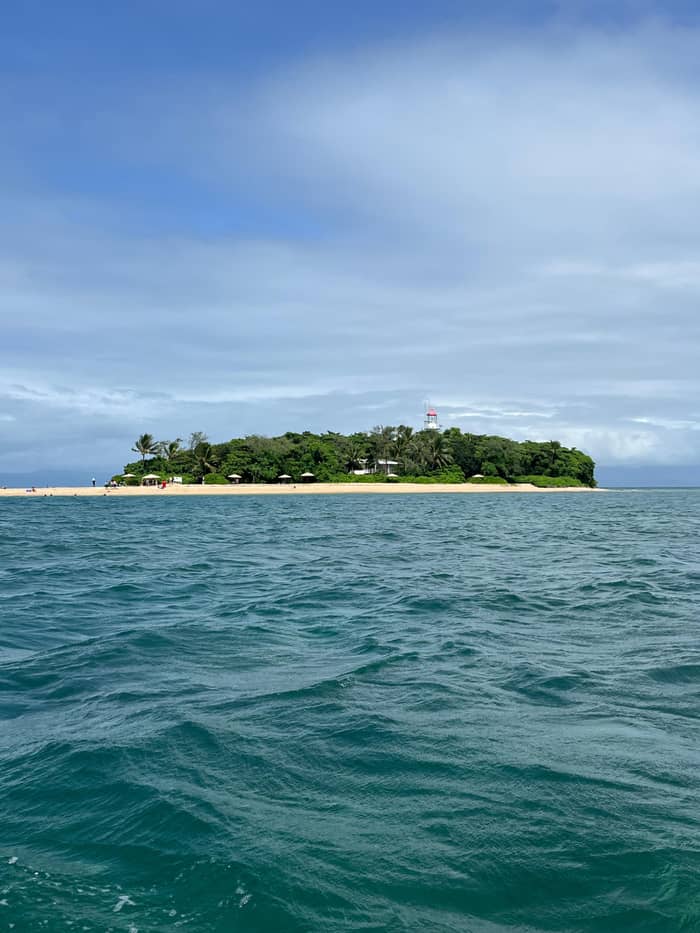
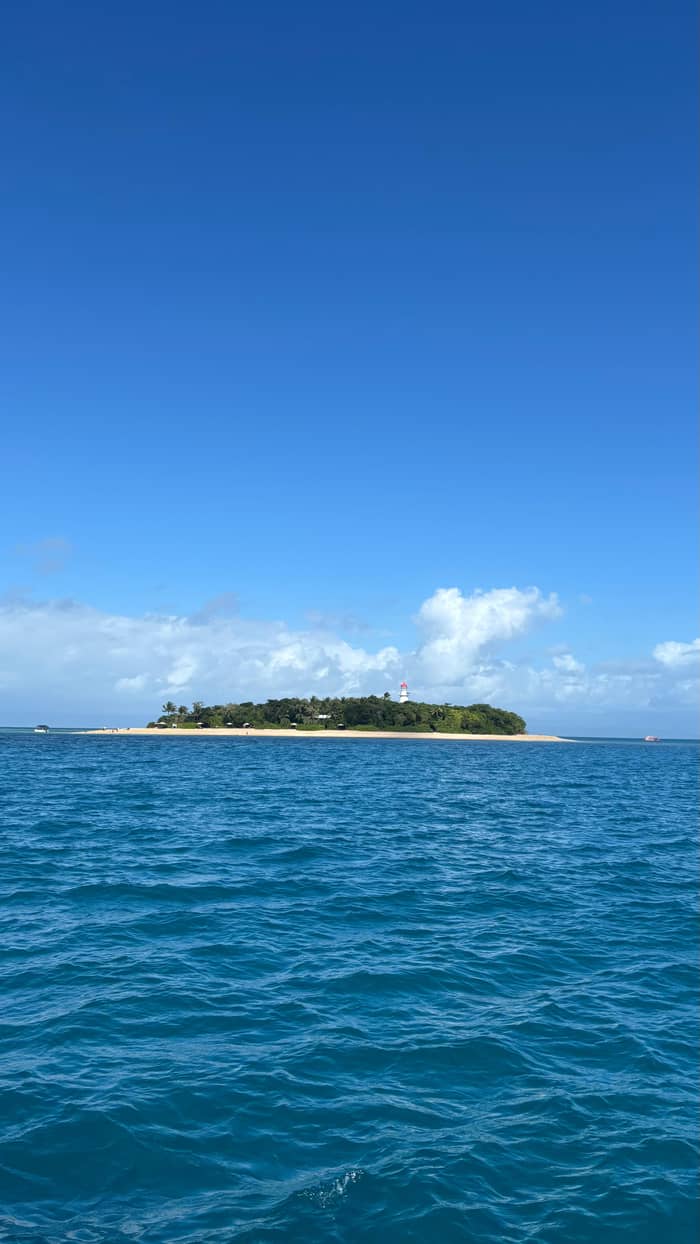
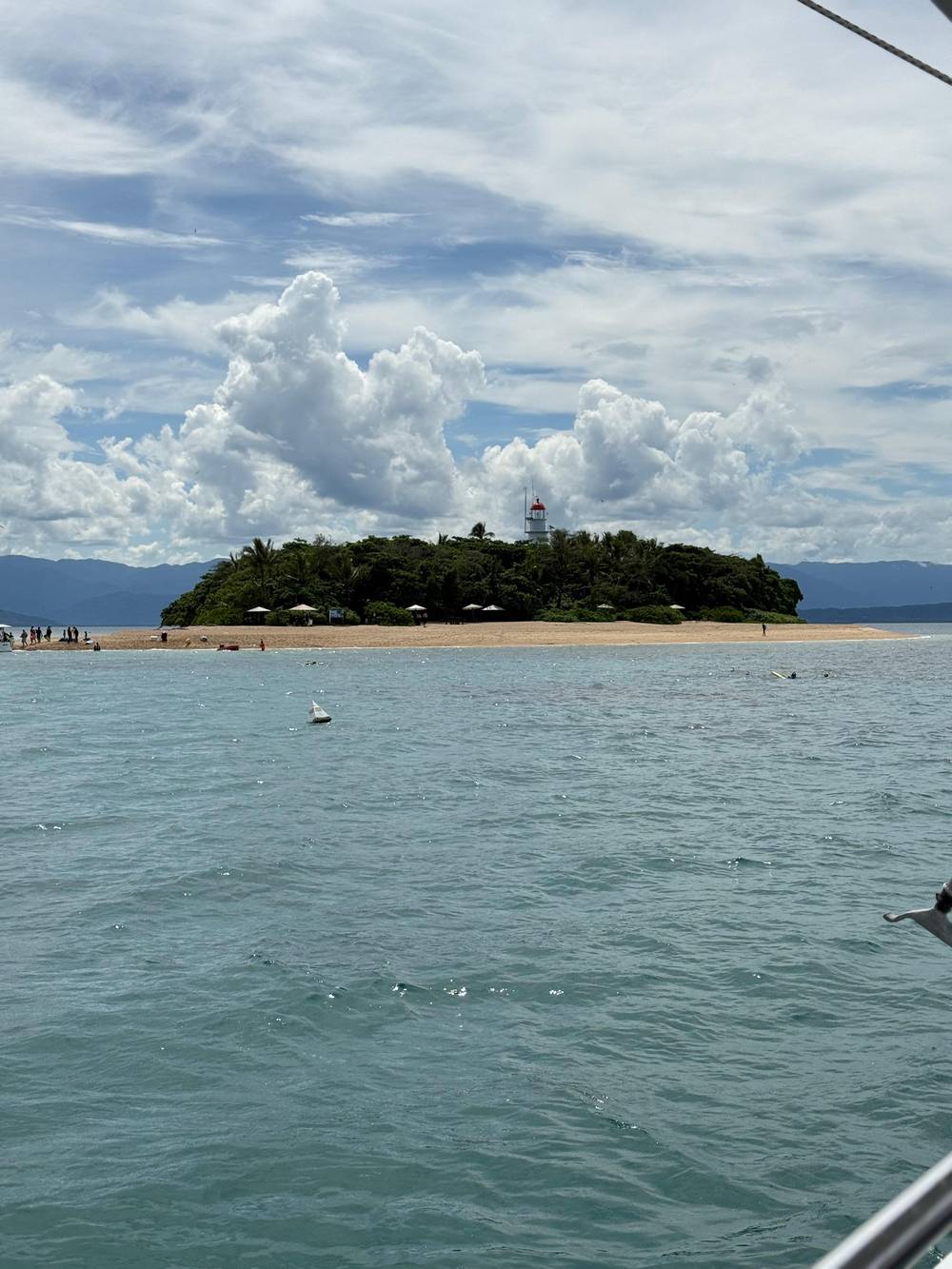
Seen from the boat, the tower looks small against the sky, and that is part of its charm. It stands on a cay you can walk around in 15 minutes, among the island's trees, with its keepers' buildings tucked behind it.10 Few lighthouses can be visited this easily on a reef day trip, and fewer still sit in a lagoon where turtles feed a short swim from the steps. Give it a few minutes of your island time even if you came for the coral.
The light in figures
| Feature | Detail | Source |
|---|---|---|
| Tower height | 18 metres3 | Quicksilver |
| Light height | 65 feet above high water17 | Island society |
| Lens | Chance Brothers 3rd order (500 mm)18 | Quicksilver |
| Building cost | £3,195, lighthouse and cottage7 | Island society |
| Range after 1993 | 16 nautical miles20 | Island society |
| Original lens | Court House Museum, Port Douglas12 | Island society |
Figures as the Low Isles Preservation Society and Quicksilver publish them; the society's figures come from the Australian Maritime Safety Authority.17,3
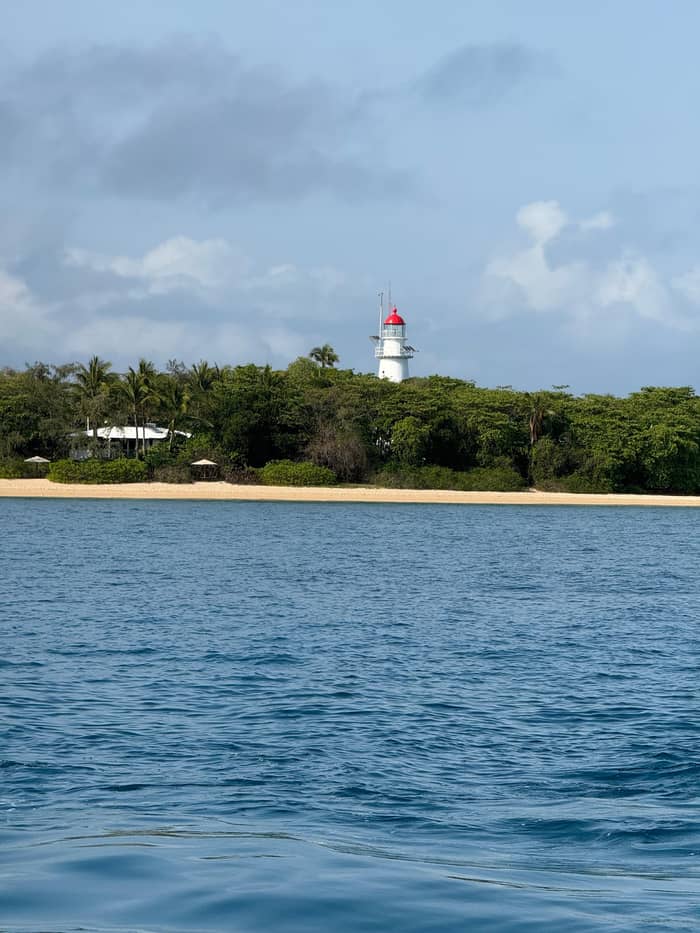
Quicksilver describes the tower as 18 metres tall, built on a timber frame sheathed in galvanised iron, with a timber staircase up to the lantern room.3 It also says the Low Isles light was the first in Queensland to have porthole windows.3 Those round windows are worth looking for from the path: they are a small, practical detail that tells you this was a working building first and a landmark second.
The light itself was a revolving dioptric light of the 3rd order, set 65 feet above high water and reaching its greatest brilliancy, a million candelas, every minute.17 Quicksilver names the lens as a Chance Brothers 3rd order (500 mm) dioptric.18 The original 1878 lens did not go to waste: it is on display at the Court House Museum in Port Douglas, run by the Douglas Shire Historical Society.12,19 A visit there after your trip completes the story.
The flame changed with the century. Oil burners lit the first light, the station was converted to electric operation in 1963, and in 1993 solar conversion turned it into a self-contained beacon.15,14 The Low Isles Preservation Society records that 1993 change as a solar conversion with a 16 nautical mile beacon.20 The tower you see today still does its job; it simply no longer needs a family to keep it burning.
The island's long record
1770
Cook logs "a small low island" from the Endeavour.11
1878
1887
The Bureau's station on the island begins.13
1963
The station converts to electric operation.14
1993
Solar conversion makes it a self-contained beacon.15
2008
Listed for Indigenous and historical heritage.16
The first keeper was Captain Daniel Owen.12 His wife, Jane Ann Owen, died and was buried on Low Island, and her grave is one of the few physical remains of the keeping era.26 When coastal erosion threatened the site, her remains were exhumed, studied and respectfully reburied in 2023 and 2024, in a project that brought archaeologists, government agencies, Traditional Owners and the island's volunteers together.27
The sea took others. On March 19, keeper William Hannah, his daughter Doris, 14, and his son William, 10, went missing in a dinghy, and their bodies were found in October 1911.28 Stories like these explain why the island's stewards treat it as a heritage site and not only a beach. When you walk past the keepers' buildings, you are walking through a place where families raised children, waited for supply boats and lived with the weather.
The keepers also became scientists' neighbors. Weather records began on the island in 1887, and the Bureau of Meteorology station there still carries that start date.13 Tourism Port Douglas Daintree says the Bureau still relies on the island as the main forecasting point for the region.29 In 1928 a scientific expedition set up camp beside the keepers for a year, a story told on our page about how the island formed.9
For history lovers
Choose by how much time you want for the walk and the museum.
If I want a guided heritage walk
Wavedancer or Sailaway full day
Both include a guided walk, led by a marine biologist on Wavedancer.21,22
If I prefer to explore at my own pace
The half day sold here
Its island time is free time, with the lighthouse a short walk from the beach.23
If I want the original lens too
Add the Court House Museum
The 1878 lens is on show in Port Douglas.19
If I want to help the island
Join the volunteer society
Volunteers act as relief caretakers and run the bird counts.24
On the heritage walk
Look up
Timber frame, porthole windows
Walk past
Where families lived
Still working
Records since 1887
In 1992 the Australian Maritime Safety Authority announced that the keepers would be withdrawn and the light automated.14 The sources differ by a year on the end of the keeping era: the Low Isles Preservation Society's history says keepers were present continuously until 1993, and its lighthouse page says the last keeper left in 1994.4,14 Either way, more than a century of family life on the cay was coming to a close.
Port Douglas did not want an empty island. More than 200 residents of the Douglas Shire gathered at a public meeting and voted to form an incorporated society to protect it.37 Their proposal for community-led caretaking impressed both the Reef Authority and Queensland's parks agency enough to attract $1.5 million in federal funding.38 The society also started a volunteer marine ranger position, and its first trainee rangers graduated in 1996.39
That decision shaped the visit you make today. Instead of a locked, unmanned station, Low Island kept people on it, kept its buildings in repair and kept its history on show. Sailaway and Quicksilver fold a guided heritage walk into their days, and the island's small museum exists because volunteers decided the story was worth telling. It is a rare case of a lighthouse that lost its keepers and still has someone living beside it.
The Low Isles caretaker role is unusual on the whole reef. The island's volunteer society says no other Great Barrier Reef island has caretakers living on it, and lists their duties: keeping the grounds, repairing buildings and water systems, watching for unauthorised vessels and talking with the roughly 50,000 tourists who come each year.5 Full-time caretakers are employed by the Reef Authority, with society volunteers acting as relief caretakers.24
Life on the cay is off the grid. The island runs on a remote area power system with its own rainwater collection and filtration.40 Solar power has replaced the 200 litres of diesel that once had to be ferried out each month, and satellite internet has replaced dial-up.41 Tourism Port Douglas Daintree says Low Isles was the first island in the Marine Park to run its island operations carbon neutral, entirely on solar power.42 Caretakers also watch the island's wildlife and report to the Reef Authority.43
People often search for a Low Isles caretaker job, and the honest answer is that it is a paid position awarded by tender, for a set term. The couple who returned to the role most recently had first volunteered in 2003 and won a paid tender a couple of years later.44 They hope their current two-year term will be extended.45 If you dream of the job, joining the volunteer society and its relief roster is the realistic first step.
Video
Science on the Reef on YouTube · Playback files load only once you tap play.
the little sand cay on which we lived and which we grew to know so intimately
Visiting the station
In 2008 Low Isles was listed as a Commonwealth Heritage place for both its Indigenous and its historical heritage.16 The Reef Authority recognises Low Island's place in the dreamings of the Kuku Yalanji and Yirrganydji People.46 Quicksilver describes the listing as the first time one place received a dual listing for Indigenous history and Australian cultural heritage.47 The island's own name, Wungkun, belongs to that older story.48
The ownership is layered. In 2003 the Reef Authority became the owner of the Commonwealth's lighthouse islands and their light stations, and the Australian Maritime Safety Authority leases back the land it uses for navigation aids.49 The Low Isles Preservation Society says the light itself is now controlled by the Queensland Parks and Wildlife Service.50 The Reef Authority reports that the lightstation's condition is checked through an annual monitoring and maintenance program.51
For a visitor this means rules, and good reasons for them. The buildings are protected, the island is part of a highly protected marine zone, and the people you meet there are its custodians, not ticket staff. Keep to the paths, leave everything where it lies, and ask before photographing anyone at work. The caretakers are usually happy to talk about the island if you show interest.
So what is on Low Isles once you land? Calypso, whose boat runs the trip sold on this site, sends guests along sandy paths to the old lighthouse, the keeper's house and the weather station that still gathers local readings.23 A full lap of the cay takes only 15 minutes, by Tourism Port Douglas Daintree's reckoning, though there is no reason to rush.10 Quicksilver also points out a rangers station on the cay.52
A guided walk adds the stories. Quicksilver says the Low Isles Heritage Walk opened in 2000, and its marine biologists lead a beach and heritage trail walk on every Wavedancer day.53,21 Sailaway's full-day trip includes a guided walk taking in the birdlife, the history and the lighthouse dating back to 1878.22 On the half-day trip you walk at your own pace, so read the signs and look for the porthole windows on the tower.
Do not miss the museum. The volunteer society rebuilt the small Low Isles Museum around four themes: Traditional Custodians and Sea Country, the lighthouse and its keepers, the 1928-29 expedition, and the biodiversity of the Great Barrier Reef.54 The work won the society a 2026 state award as the volunteer museum or gallery of the year.55 Remember that there are no toilets on the island; facilities are on the boats.36
FAQ
The contract was reported complete in August 1878 and the light was first shown in mid-November 1878.1
The tower has a timber frame with a galvanised sheath and a timber staircase to the lantern room.3
Full-time caretakers are employed by the Reef Authority, with volunteer relief caretakers from the island's society.24
It is a Commonwealth Heritage place for both Indigenous and historical heritage.16
Sources
Continue reading
Choosing a Low Isles boat? Ask a real person here.